


Saru came round the corner with his own jug and stopped before they saw him.
Two of them at the long bench, on their feet, leaning into each other across the slop pot. A big iron thing, half-full, the water in it grey and skinned and shifting as their hands shook. Pero had one handle. Aro had the other. They were holding it between them and going nowhere.
“It’s washing up.” Pero’s voice was low, not for the room. “Slop is washing up. You’re at the dishes. You take it.”
“I’m at the dishes. That’s what I’m doing. I can’t be at the dishes and out the back door at the same time.”
“Then stop being at the dishes for two minutes.”
“You stop cooking for two minutes and carry your own water out.”
The pot tipped a quarter-inch and they both corrected without looking down. Pero’s jaw was set wrong — not angry-wrong. The other wrong. The kind a man gets when he’s been on his feet since before light. Aro’s jaw was working sideways. Neither of them could put it down — the bench was clean, the floor was clean, and the pot was filth — and neither of them would let go. One slip and the whole grey lot of it was on them both.
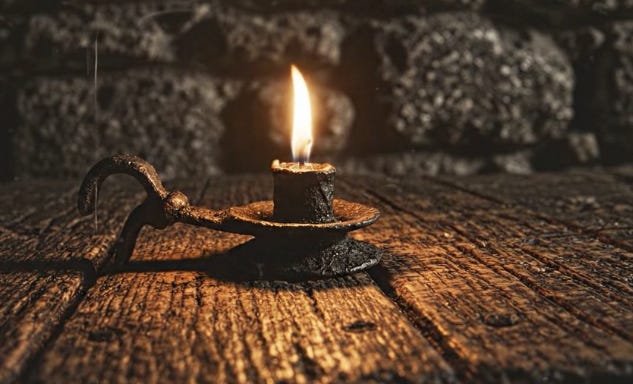
The ceiling was low enough here that the lamp made one warm circle and the rest of the room leaned in around it. Down the bench three of the others had gone very quiet. Eyes on their own work. Not looking at each other. Not looking at the pot. The particular quiet of men who, by the look of them, had noticed something and decided not to have noticed it.
He looked at the pot. He looked at Pero’s jaw. He looked at the bench. There were two jugs by Aro’s elbow, the one Aro had come for and another beside it.
“Aro,” he said. “Both jugs. One in each hand.”
Aro blinked at him.
“Both of them. Pick them up.”
Aro looked down at his hand on the pot handle, then at Pero, then let go and picked up the jugs. Pero’s free hand came across to the empty handle. He had the pot now, both handles, steady.
Saru lifted his own jug a little. “Right, you two. Follow me.”
He went for the back door. He didn’t look behind him. Behind him there was a half-second of nothing and then the scuff of feet.
At the door he half-turned to the room. “Three jugs and a bucket of disgrace. Don’t anyone tell my mother.”
The room laughed.
The laugh was too big for the joke. He’d learned not to question that. Relief sounds like laughter. It just needs somewhere to go.