


Year 352 of the Moshiri Reckoning — 27th year of Emperor Masahito
Kōraia Te Mākuhira Urarau & Narako Toki
The Imperial Centre
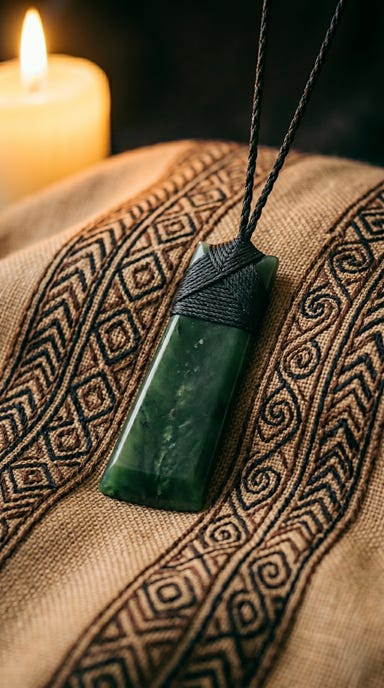
She woke before he did. The room was the cold kind of dark that meant winter was finished pretending. She put her fingers on his arm, just above the wrist, where the hairs were. He stirred, still asleep, and turned away from her, making room without knowing it.
She fitted herself against his back. He was warm; she was not.
“You’re freezing,” he said, into the dark, half-awake.
“I am aware.”
He turned towards her. His arm found her hip and pulled her closer; one of the things she loved about him, one of the things she dared not tell him she would miss.
They lay face to face, close enough that she could feel the warmth of his breath. She did not move away from it. Above the curtain, the dark was going grey at the edges, the way it did when morning was almost ready. She wasn’t ready.
“I won’t miss you,” she said. “Not even a little.”
“No?”
“Except on nights like this. Because you are warm and I am cold, and that is a practical consideration, not a sentiment.”
He laughed, low. Then quiet. Then: “I’ll miss you. Your love. Your presence. Your advice. Your—” He stopped. He did not usually do this. “Your support. I’ll miss all of it.”
She placed her finger to his lips, smiled and breathed in.
“Ē ko Poutangata!” She announced him to the dark room, mock-formal, as if presenting him to a court that wasn’t there. Then quieter, the names that were only hers: “My toki. My pou. You’ll be fine. You will be exactly fine.”
Kōraia moved her hand to his chest and felt him receive her words the way he always received them — as if they were said about somebody else. He finally let his breath out.
“I’ll miss—” she started. Your hands. The way you say my name when you don’t know I’m listening. The—
In the grey half-light she could see he had gone still. He had heard her stop. He wasn’t going to ask.
“Wait. I have something for you.”
She got up. Crossed the room because the candle mattered more than the cold. Lit it. The room came up around them in soft yellow. She turned and came back to him still naked, and his arm was already lifting for her. He had been watching her cross the room and now had something else on his mind.
“Stop. This is important.” She caught his hand and put it back down. “And it’s cold.”
She grabbed her nightdress off the chair and pulled it over her head. He wrenched his attention away, then sat up and reached for his shirt and pulled that on too, following her; the cold was real for them both now that she had named it. He propped himself against the headboard properly, the way he sat when she said this is important and meant it.
She reached down, arching back against him to get her arm under the bed. Her fingers found the bundle where she had left it. She pulled it up and laid it between them.
Harakeke cloth, embroidered for this. She had not made it herself. She had paid someone to make it knowing exactly what it was for.
She unwrapped it slowly, one fold at a time, each motion deliberate. When she looked up he was impatient.
The hei toki lay in the cloth. Greenstone, pounamu, ancient, the edge still true after three hundred years. It had been waiting. She had always sensed it was waiting — for what, she had not let herself name until now.
His hand moved toward it. She shook her head, once, small. Then she lifted it by the cord — only the cord — and slipped it over his head. She settled the cord at the nape of his neck. The stone hung against his chest and she looked at it for a moment, green and still and already his. There was no taking it back. She touched it once with the back of her hand, pressing it against his shirt, and held it there a second longer than she needed to.
He put his hand over hers. “Kōraia.” Just her name. That was the thank-you.
Then he picked it up to look at it. She watched him turn it in his fingers. She could see the candlelight catch in the stone. And then, slowly, he closed his palm around it.
Something in his face that wasn’t there and then was and then wasn’t.
“What?” she said.
“Nothing,” he said. “I don’t — nothing.”
She looked at him. Was there something there? He wasn’t lying. He didn’t know.
She did not say what you just felt is real, let me tell you what it is. She did not say keep it hidden, and here is why, and why, and why. He tucked it under his shirt before she could find the shape of any of it. Fast. Like he already understood.
She decided that he did.
She put her arms around him instead.
He slept after.
She didn’t.
She lay in the dark and went through them, one at a time, the way she would have gone through a list of stock at the end of a day.
The first was the mirror. He had given her his list and she had started to give him hers and the gift had cut across it. Your hands. She had got that far and not further. Lying here she went on with it the way she should have done it then. The way he said her name when he didn’t know she was listening. The sound he made in the morning before he was properly awake, which was not a word and was the most honest thing he ever said. She stopped before the list ran out, because the point was not the list. The point was that she had not given it to him. He had given her his and she had given him a gift instead and a gift was not the same thing.
The second was the flicker. She had seen it. She had asked and he had said nothing and she had let him say nothing. Lying here she had the sentence she had not used — what you just felt is real — and it sat in her mouth still, fully formed, four hours late.
The third was the warning. He had hidden it so fast that she had decided he understood, and lying here in the dark she was no longer certain that she had decided it because it was true or because it was easier. She went through the reasons she had meant to say. That it should not go anywhere near the Order. That if anyone traced the stone the questions would arrive at her door long before they arrived at his. That this gift was not — she stopped. He had hidden it. He must have known what it was. She decided this again. It did not quite hold the second time.
There was a fourth, and she would not look at it straight. She wanted him to wear it outside his shirt. She wanted the road and the river and every stranger between here and Daranak to see the stone on him and know whose it was, and whose he was, and that he was the father of her youngest. She put the thought away.
She lay in the dark with the warmth of him against her and she did not sleep.
A few words
Pounamu — greenstone; New Zealand jade. Carried, given, worn. Never bought.
Hei toki — a greenstone adze worn as a pendant. A taonga: a treasure of deep personal and ancestral significance.
Harakeke — flax.
Ē ko Poutangata! — “Oh, the adze of authority!” A ceremonial exclamation invoking the toki poutangata — a sacred adze carried only by chiefs on occasions of great significance.
Toki — adze. Also his name. Ē ko Poutangata! is the exclamation and the gift at once: she names him, then gives him the thing he is named for.
Daranak — the alpine pass settlement; his posting.
Pou — pillar. Her private name for him.
Te Tuku — the act of giving. A taonga is given, never taken.